Listen to the audio version of this article.
I believe that careful, patient, objective observation is the most important skill a professional can develop, and that most failures in science and in leadership alike trace back not to bad data but to insufficient attention. This belief was not formed in a laboratory. I grew up in a small hilly town in the heart of India, examining the wilderness closely as the six seasons passed. I was learning to observe.
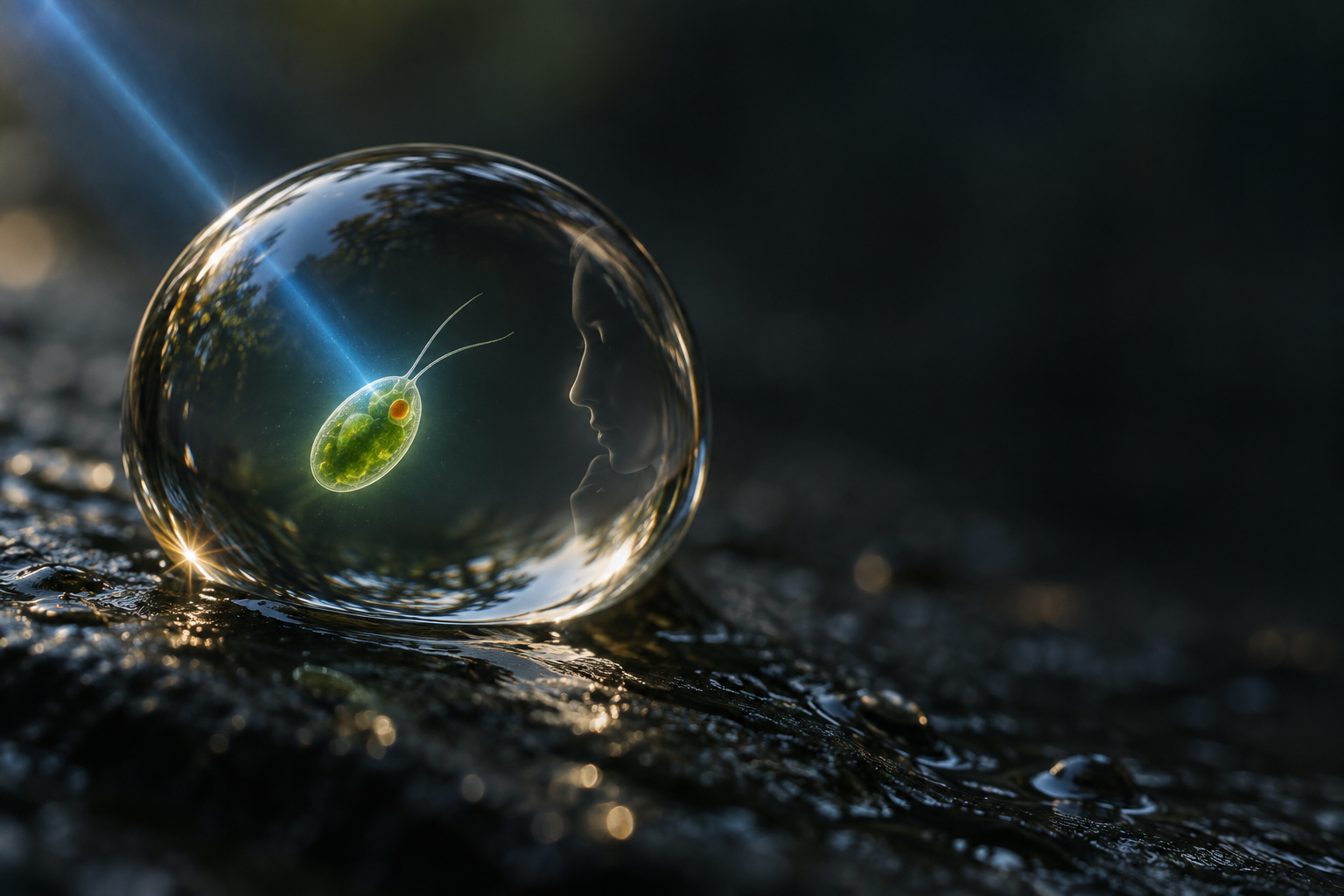
When I arrived in the United States, curiosity was the only possession I carried, and science gave that curiosity a grammar. In the laboratory, I learned that observation is not passive: it is an act of discipline and humility, a willingness to set aside what you expect in order to see what is actually there. I have spent over fifteen years in biomedical research in oncology and immunology, and the most important lesson I have taken is this: the experiment rarely fails; more often, the observer does.
In immuno-oncology, the difference between a therapy that works and one that does not often comes down not to the data itself but to the quality of attention the observer brings to it. I have sat in meetings where the same data produced entirely different conclusions, depending on who was looking and what assumptions they carried into the room. Observation, I came to understand, is never neutral. It is shaped by knowledge, yes, but also by wonder, by the willingness to ask what you might have missed.
Photography taught me the same lesson from a different angle. One afternoon, I was trying to photograph a camera-shy hummingbird, hovering for only a fraction of a second before vanishing. I kept chasing its movement rather than watching it. When I finally stopped predicting and simply waited for it to perch, it held still just long enough for the sun to catch the iridescence of its feathers, a flash of green and copper that no amount of preparation could have manufactured. It made me understand that the same discipline governing rigorous science also governs art: resist the urge to force the frame, and stay open to what is actually forming in front of you.
What I bring to any setting, whether a laboratory, a team, or a conversation, is not credentials but the quality of my attention. In my experience, observation is the beginning of every sound decision and every meaningful connection between people. It is the foundation of science, the soul of art, and the quiet discipline of a professional life worth building.
My name, Gaurav, means “honor” in Sanskrit, and I have come to understand that truly honoring something requires observation and study. Observation is, in the end, an act of respect: for the data, for the patient whose cells are being tested in an in vitro assay, for the colleague whose perspective differs from mine, for the truth I have not yet found. This I believe: look carefully. The rest will follow.



Leave a Reply