On the competence we practice with people we will never see again
Listen to the audio version of this article.
There is a four-way stop near my house where nobody has the right of way and everybody gets through. Four cars arrive within the same second. There is a pause, a small lift of a hand, a nod, and the thing resolves in under three seconds. No law specifies the order. No one is graded on it. And yet a single driver who cannot read that moment makes the morning worse for a dozen strangers.
I have started calling what happens at that intersection civil intelligence, and I think it is the most underrated social competence we have.
TL;DR
- Emotional intelligence is about people we have relationships with. Most of life is spent among strangers.
- Civil intelligence is the capacity to act well toward people you do not know, will not see again, and owe nothing to.
- Six parts: situational literacy, calibrated attention, friction absorption, repair, generous attribution, and cost horizon.
- The hard cases are the ones where the bill arrives late. Littering, left-lane camping, noise, wasted food, energy, and land all deliver the benefit immediately to one person and scatter the cost across many, including creatures who cannot object.
- We have engineered the low-stakes encounter out of daily life. It is a practiced skill, and we removed most of the practice.
- It has no return-on-investment story, which is exactly why it is a better signal of character than emotional intelligence.
The gap in our vocabulary
We are well equipped to talk about intelligence with people we know. Intelligence Quotient (IQ) gave us one axis. Then Salovey and Mayer, in 1990, gave us emotional intelligence (EI) or emotional quotient (EQ), which Goleman carried into every conference room in the country a few years later: perceiving emotion, using it, understanding it, regulating it. EQ has been enormously useful, but notice its orientation. It is relational and largely inward-facing. My feelings. Your feelings. Our working relationship, which has a future and therefore a reason to be maintained.
Most of a life is not spent that way. Most of a life is spent among people with whom we have no relationship at all: the platform, the checkout line, the trailhead, the apartment stairwell, the hospital waiting room. These people cannot promote us, will not remember us, and have no leverage over our future. How we behave toward them is the part of our character that operates without an audience that matters.
Civil intelligence: the capacity to act well among people you do not know, will not see again, and owe nothing to in any contractual sense.
This is not new sociology so much as neglected sociology. Erving Goffman named the core move in 1963 and called it civil inattention: the brief glance that acknowledges a stranger’s presence and then releases them from further scrutiny, granting privacy in public. Jane Jacobs, two years earlier, described the sidewalk ballet, a street kept safe not by policing but by ordinary people casually attending to one another. Elijah Anderson’s work on the cosmopolitan canopy documents the specific urban spaces where diverse strangers rehearse getting along. Danielle Allen built an entire political philosophy around talking to strangers. The literature is there. The everyday word for it is not.
What it seems to be made of
From observation rather than measurement, six components:
Situational literacy. Reading the local grammar of a space. How close to stand, how loudly to speak, whether this is a place where eye contact is a greeting or an intrusion.
Calibrated attention. Knowing when to look and, more importantly, when to stop looking. Goffman’s insight was that restraint is the courtesy, not engagement.
Friction absorption. The willingness to eat a small cost rather than escalate. Someone takes the parking spot. You let it go, not because you are weak, but because you have correctly priced the alternative.
Repair. The step aside, the “my fault,” the half-second of accommodation that costs nothing and resets an encounter that was about to sour.
Generous attribution. Defaulting to the most plausible innocent explanation for a stranger’s behavior, particularly a stranger unlike you. The slow driver is lost, not stupid. This is the component that quietly does the heaviest work in a plural society.
Cost horizon. The capacity to feel a consequence that lands somewhere else, later, on someone you will never meet. This is the component that separates good manners from actual civility, and it is the one most of us fail.
The harder case: when the bill arrives late
Everything at the four-way stop is legible. You can see the person you inconvenience, and they can see you. That visibility is what makes the courtesy easy. The harder version of civil intelligence is the one where the cost is deferred, distributed, and untraceable to any particular person.
Consider the driver who settles into the left lane and stays there. He is not breaking a rule he can feel. He is levying two seconds on each of forty cars, and traffic physics does the rest. Sugiyama and colleagues demonstrated in 2008 that on a circular track with no obstacle whatsoever, a single unnecessary brake tap propagates backward until cars come to a complete stop. The same holds for the driver who slows in the through lane to make his turn instead of entering the turn lane. One person’s small convenience becomes a shockwave traveling a mile behind him, and not one second of it is ever attributed to its author.
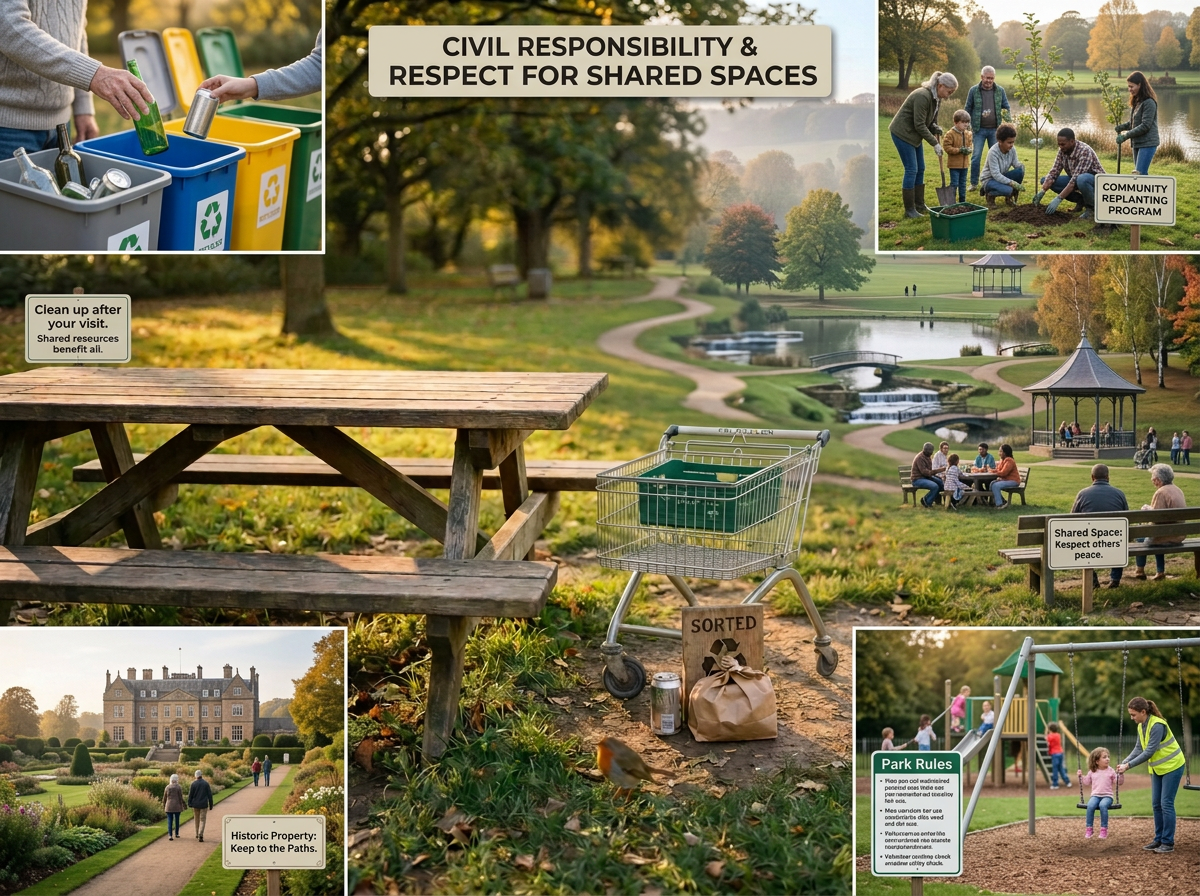
Now extend the logic. Litter, which relocates a minor unpleasantness from one person onto a thousand. Noise, which takes something held in common, quiet, and privatizes it. Food discarded, when roughly a third of what the world grows is lost or never eaten. Lights and engines left running. Land consumed for one more structure that will be occupied a few hours a week. Land and energy deserve naming explicitly, because they widen the circle. The commons they draw down is not shared only with other people. A meadow paved over is a decision taken on behalf of every other creature with a claim on that ground and that air, parties who were not consulted and cannot object. In each case the actor captures the full benefit immediately and the cost disperses into a population too large, too distant, or too voiceless to complain.
Garrett Hardin, whose later writing on population took turns worth disavowing, named the structure in 1968 and called it the tragedy of the commons. Elinor Ostrom then spent a career demonstrating that he was too pessimistic: communities do protect shared resources, durably and without coercion, when norms are local and behavior is visible. Which returns the problem to exactly where it started. These are not failures of information. Nobody litters for lack of data. They are failures of imagination about people who are not in the room, including the people who will be in it later.
What I learned the slow way
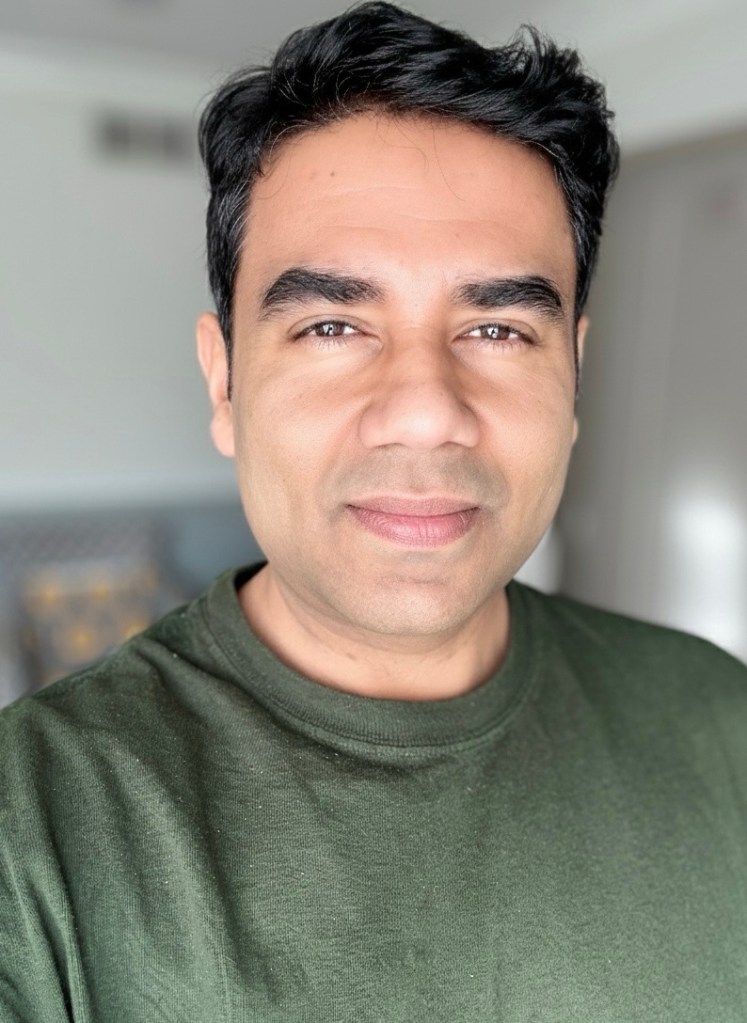
I arrived in this country at eighteen from a small hill town in north-central India, and the thing I had to learn was not English. It was the grammar of distance. How far to stand. How long a glance may last. When “how are you” is a question and when it is punctuation. Which doors you hold and for whom. Every culture runs this operating system, and every culture assumes its version is simply what it means to be decent.
Two things surprised me. The first is how forgiving people generally are about the etiquette itself. The second is that nearly all the cost of getting it wrong is borne by the person getting it wrong, in the form of a low, constant hum of uncertainty. That asymmetry is worth remembering the next time someone seems stiff or oddly formal in a room. They may be doing arithmetic you finished years ago.
Birdwatching taught me the same skill from another direction. To see anything, you have to lower your rate of movement until the world stops rearranging itself around you. Presence without intrusion. It turns out to be excellent training for a crowded train.
Photography taught me the ethics of it. A lens pointed at a person is a claim on their attention, and there is a real difference between seeing someone and taking something from them. Asking is not a formality. It is the whole transaction.
And the lab taught me the institutional version. The best teams I have worked on were not the ones with the strongest individual scientists. They were the ones where people cleaned the shared bench at seven in the evening when nobody was left to notice. Shared equipment, shared freezers, shared reagents. Every one of those is a small, unenforceable commons, and a group’s fate is written in how it treats them.
Why it is getting harder
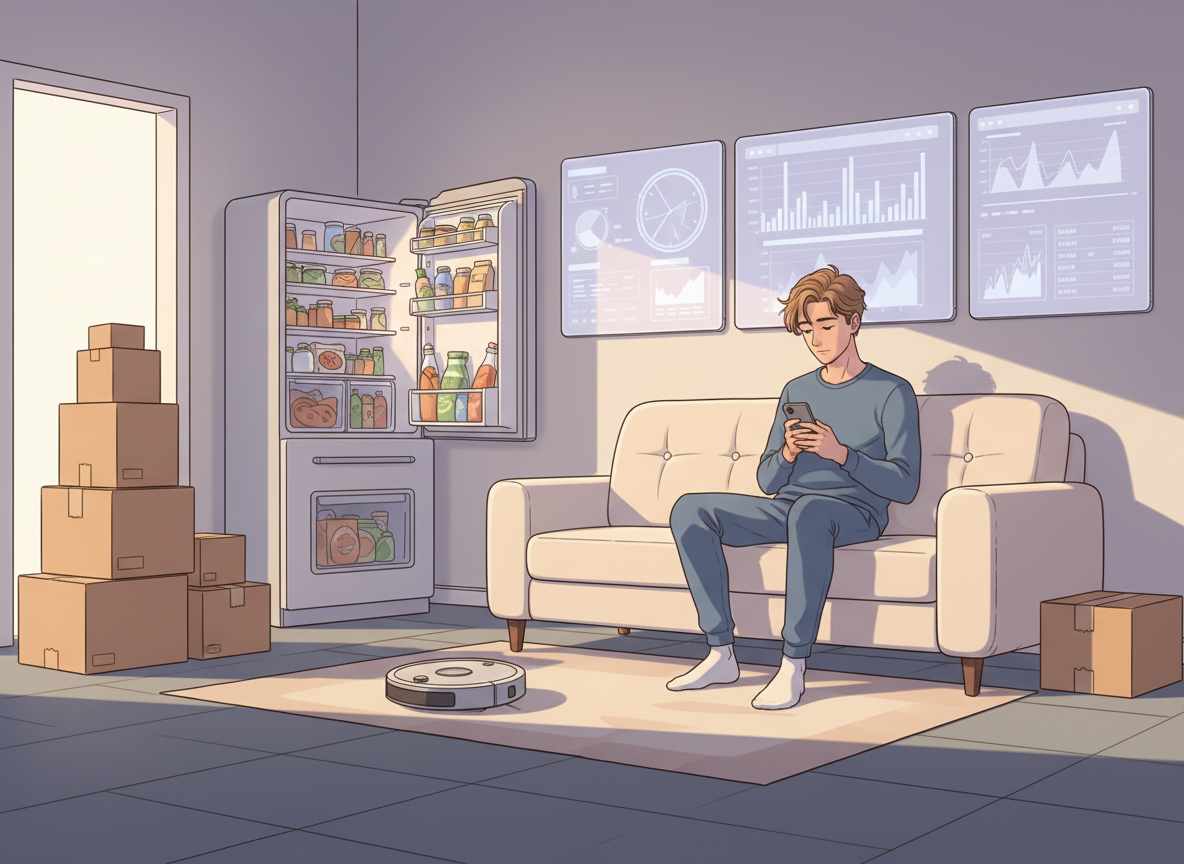
We have quietly engineered the low-stakes encounter out of daily life. Delivery, self-checkout, remote work, sorting algorithms that route us toward people who already agree with us. None of this is a conspiracy. All of it is convenient. But civil intelligence is a practiced skill, and we have removed most of the practice. Allport’s contact hypothesis, refined by Pettigrew and Tropp’s meta-analysis across more than five hundred studies, holds that contact under decent conditions reliably reduces prejudice. Fewer encounters, fewer repetitions, weaker skill.
There is also a status problem. EQ has a return on investment, so we teach it. Civil intelligence has no pitch deck. It is exercised most fully where no one who could reward you is watching. Which is exactly why it is the better signal of character.
Practicing it
- Take the slower line occasionally, and stop treating the wait as something stolen from you.
- Learn the name of one person who is of no use to you.
- Let someone finish being wrong before you correct them.
- When a stranger irritates you, write the most generous plausible explanation in your head, then act on that one.
- Leave shared space better than you found it, specifically when no one will know.
- Before any small waste or small convenience, multiply it by everyone who could reason the same way, and see whether you still want it.
A society is not held together mainly by its laws. It is held by millions of small, unenforceable accommodations between people who have no particular reason to accommodate one another. Civil intelligence is the name I would give to whatever makes those accommodations feel ordinary.
I would take a colleague who has it over one who merely tests well for empathy.
What was the last small courtesy a stranger extended to you that you are still thinking about?
References
Where a free copy exists it is listed first, followed by the DOI or publisher. Borrowing at the Internet Archive requires a free account.
- Salovey, P. & Mayer, J. D. (1990). Emotional Intelligence. Imagination, Cognition and Personality, 9(3), 185–211. Free at the University of New Hampshire repository · DOI
- Goleman, D. (1995). Emotional Intelligence: Why It Can Matter More Than IQ. Bantam Books. In print
- Goffman, E. (1963). Behavior in Public Places: Notes on the Social Organization of Gatherings. Free Press. Civil inattention, ch. 6. Borrow at the Internet Archive
- Jacobs, J. (1961). The Death and Life of Great American Cities. Random House; in print from Vintage, ISBN 0-679-74195-X. Borrow at the Internet Archive
- Anderson, E. (2004). The Cosmopolitan Canopy. The Annals of the American Academy of Political and Social Science, 595(1), 14–31. DOI. Expanded as The Cosmopolitan Canopy: Race and Civility in Everyday Life (Norton, 2011).
- Allen, D. S. (2004). Talking to Strangers: Anxieties of Citizenship since Brown v. Board of Education. Borrow at the Internet Archive · University of Chicago Press
- Sugiyama, Y., Fukui, M., Kikuchi, M., Hasebe, K., Nakayama, A., Nishinari, K., Tadaki, S. & Yukawa, S. (2008). Traffic jams without bottlenecks: experimental evidence for the physical mechanism of the formation of a jam. New Journal of Physics, 10, 033001. Open access
- United Nations Environment Programme (2024). Food Waste Index Report 2024: Think Eat Save. Free at UNEP. Reports 19% of food available to consumers wasted at retail, food service and household level, in addition to the 13% FAO estimates is lost earlier in the supply chain.
- Hardin, G. (1968). The Tragedy of the Commons. Science, 162(3859), 1243–1248. DOI
- Ostrom, E. (1990). Governing the Commons: The Evolution of Institutions for Collective Action. Borrow at the Internet Archive · Cambridge University Press
- Allport, G. W. (1954). The Nature of Prejudice. Addison-Wesley; in print from Basic Books. Borrow at the Internet Archive
- Pettigrew, T. F. & Tropp, L. R. (2006). A meta-analytic test of intergroup contact theory. Journal of Personality and Social Psychology, 90(5), 751–783. 713 independent samples drawn from 515 studies. Free PDF · DOI
Further reading
- Paluck, E. L., Green, S. A. & Green, D. P. (2019). The contact hypothesis re-evaluated. Behavioural Public Policy, 3(1), 129–158. DOI. The honest counterweight to the paragraph above: the evidence for contact reducing prejudice is thinner than the 2006 meta-analysis suggests, particularly among adults.
- Sennett, R. (2012). Together: The Rituals, Pleasures and Politics of Cooperation. Yale University Press. In print. Cooperation treated as a practiced craft rather than a disposition.
- Putnam, R. D. (2000). Bowling Alone: The Collapse and Revival of American Community. Borrow at the Internet Archive · Simon & Schuster, revised edition. The bridging and bonding distinction maps closely onto the stranger and relationship axis.
- Amin, A. (2002). Ethnicity and the multicultural city: living with diversity. Environment and Planning A, 34(6), 959–980. DOI. On micro-publics, the small everyday settings where difference is actually negotiated.
- Tadaki, S., Kikuchi, M., Fukui, M., Nakayama, A., Nishinari, K., Shibata, A., Sugiyama, Y., Yosida, T. & Yukawa, S. (2013). Phase transition in traffic jam experiment on a circuit. New Journal of Physics, 15, 103034. Open access. The follow-up to Sugiyama, for anyone who wants the physics.


Leave a Reply